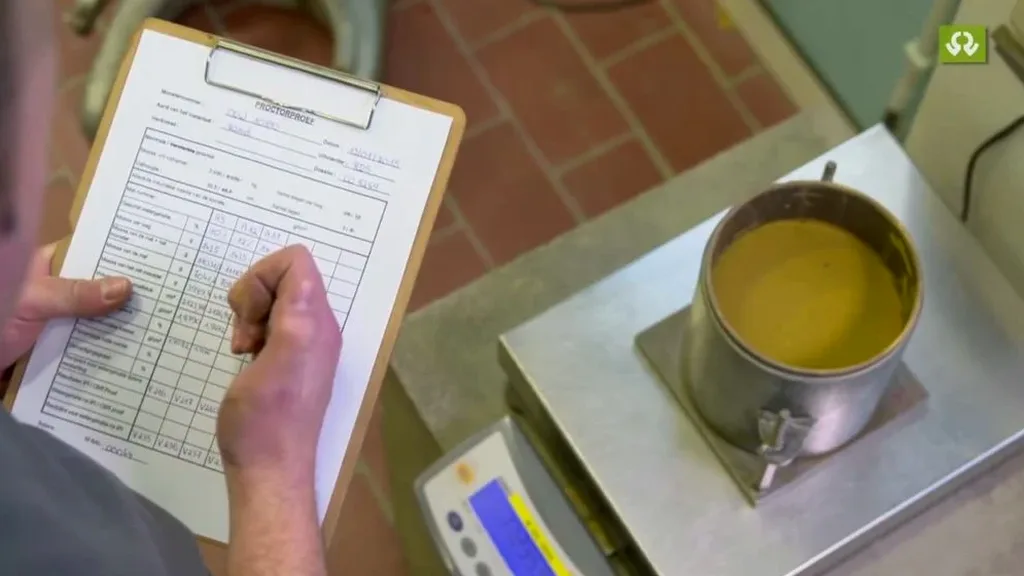
In Bakersfield, situated within the southern San Joaquin Valley, in-situ testing is critical for characterizing complex alluvial and fluvial deposits typical of the region. The subsurface here often consists of interbedded sands, silts, clays, and occasional gravels, with variability due to historic floodplain dynamics and agricultural influences. Geotechnical investigations rely on methods that measure soil strength, stiffness, and permeability directly in place, avoiding sample disturbance. Common techniques include Standard Penetration Testing (SPT) and Cone Penetration Testing (CPT), supplemented by dilatometer (DMT) and pressuremeter (PMT) tests for deeper or softer layers. The technical context requires attention to groundwater fluctuations and potential liquefaction in loose sands during seismic events, a key concern in the seismically active Bakersfield area.
Testing protocols follow ASTM International standards, including ASTM D1586 for SPT and ASTM D5778 for CPT, with local modifications to account for dense gravel layers that can impede penetration. ISO 22476 series provides equivalent international guidance, though Bakersfield practitioners typically adhere to ASTM for regulatory acceptance. Local methods often integrate downhole geophysical techniques like shear wave velocity measurements (ASTM D7400) to cross-validate penetration data. For shallow foundations or pavement design, in-place density tests (ASTM D6938) using nuclear gauges are common, while dynamic cone penetration (DCP) is used for compaction control. Standards emphasize energy corrections for SPT hammers and pore pressure dissipation for CPT, ensuring reproducibility across diverse Bakersfield site conditions.
The primary applications of in-situ testing in Bakersfield include foundation design for residential, commercial, and agricultural structures, as well as infrastructure projects such as roads, bridges, and pipelines. Seismic site classification per ASCE 7-22 demands Vs profiles or SPT-N values, often derived from in-situ tests. Another critical application is evaluating liquefaction potential in the city's floodplain and Kern River terraces, where loose sand layers pose risk. In-situ permeability tests (e.g., falling head in a piezocone) assist in dewatering design for deep excavations. Environmental geotechnics also benefit, with CPT-based soil classification mapping contaminant plumes from historic agricultural activities, such as nitrates and volatile organics.
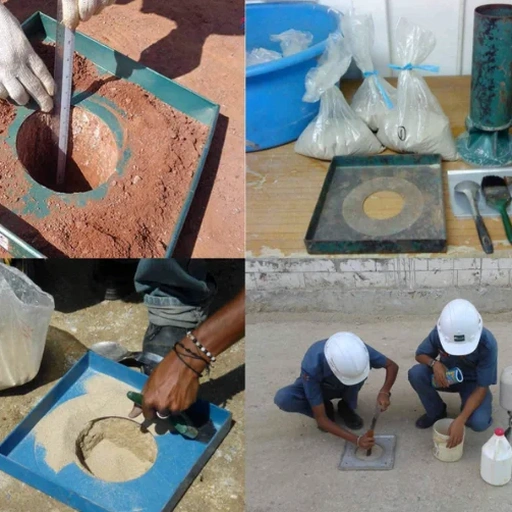
Typical cases in Bakersfield include site investigations for large-scale solar farms on former farmland, where CPT soundings reveal shallow clay crusts over soft silty clays. Another case is the expansion of Highway 99, where SPT boreholes encountered dense cemented layers from caliche formation, requiring modified drilling techniques. In the downtown area, historical fill and alluvial fans necessitate careful pressuremeter testing for deep foundation design of multi-story buildings. For oilfield infrastructure, DMT provides modulus values for pipeline trench backfill. Each case highlights the need for integrating multiple test types to capture spatial heterogeneity, especially where abrupt changes in soil type occur within a few meters.
Recommendations for in-situ testing in Bakersfield emphasize a phased approach: initial CPT or geophysical surveys to map variability, followed by targeted SPT or PMT at critical depths. For liquefaction assessment, use of a piezocone (CPTu) with dissipation tests is strongly advised to estimate hydraulic conductivity and cyclic resistance. When dealing with gravelly soils, seismic CPT or SPT with energy measurement is more reliable. For soft clay layers at depth, self-boring pressuremeters minimize disturbance. Local professionals should calibrate correlations (e.g., N60 to relative density) to the region's specific soil mineralogy, particularly high silt content from alluvial processes. Regular cross-referencing with laboratory index tests (atterberg limits, grain size) is recommended to validate in-situ interpretations, ensuring conservative yet economical designs.
Ultimately, in-situ testing in Bakersfield must adapt to challenging subsurface conditions—variable density, cemented horizons, and high groundwater. A robust quality assurance plan includes documented field calibration of all devices, real-time data review, and adherence to ASTM standards. For critical projects, engaging a niche geotechnical firm with local experience is beneficial, as they understand the historical land use impacts (e.g., deep drying from decades of agriculture) that affect test results. Data from multiple methods should be synthesized in a geostatistical model, improving reliability of design parameters. Continuous monitoring of testing procedures, such as hammer efficiency in SPT or cone inclination in CPT, reduces uncertainty. The goal remains capturing the true in-situ behavior to ensure safe, cost-effective foundations across Bakersfield's diverse geotechnical landscape.