Underground excavations in Bakersfield represent a specialized discipline within geotechnical engineering that encompasses the planning, design, construction, and monitoring of subterranean spaces. This category covers everything from shallow utility trenches and deep building basements to complex tunnel networks for transportation and water conveyance. The importance of rigorous underground excavation practice here cannot be overstated: Bakersfield's rapid urban expansion and its position as a hub for both agriculture and energy necessitate robust below-ground infrastructure, while the challenging local ground conditions demand a meticulous, soil-mechanics-driven approach to prevent costly failures, ground loss, and damage to adjacent structures.
The local geology presents a unique set of challenges that define excavation engineering in the southern San Joaquin Valley. Bakersfield is underlain by deep alluvial deposits, characterized by interbedded layers of sands, silts, and lean clays. Critically, much of the near-surface stratigraphy includes soft, compressible soils with high groundwater tables, conditions that are prone to raveling, caving, and basal heave. This makes geotechnical analysis for soft soil tunnels not just a preliminary step but the very foundation of any successful project. Without a thorough understanding of the soil-structure interaction in these weak sedimentary layers, the risks of tunnel face instability and excessive surface settlement escalate dramatically.
Navigating the regulatory landscape is an integral part of any underground excavation project in Bakersfield. All work must comply with the stringent safety standards set by the California Division of Occupational Safety and Health (Cal/OSHA), particularly its detailed requirements for trenching and excavation shoring. Beyond worker safety, projects often fall under the purview of the City of Bakersfield's Public Works Department for encroachment permits and the regional water quality control board for dewatering and groundwater management. Adherence to these regulations, combined with industry guidelines from bodies like the American Society of Civil Engineers (ASCE), ensures that a project not only meets legal obligations but also follows nationally recognized best practices for risk mitigation.
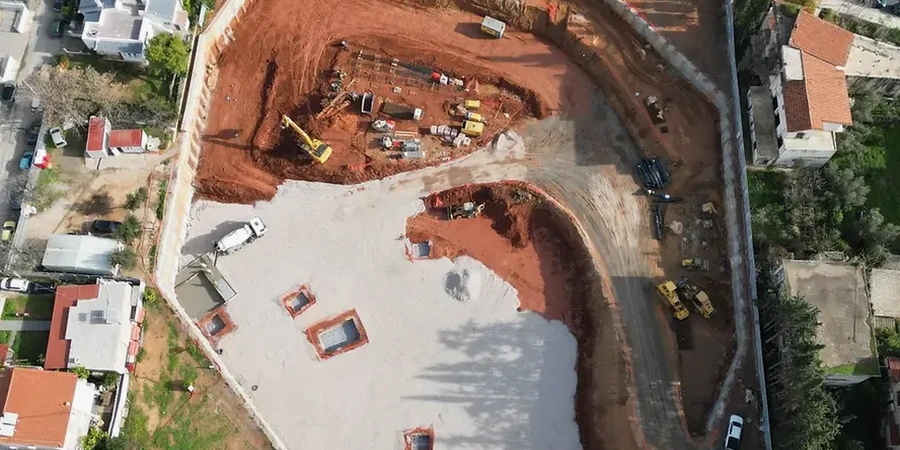
The types of projects that demand this specialized expertise are diverse and critical to the region's function. They include the installation of deep sewer and storm drain lines, the construction of underground vaults for electrical substations, and the development of transportation underpasses. A particularly vital application is the geotechnical design of deep excavations for building foundations and basements in Bakersfield's downtown core, where shoring systems must protect adjacent historic buildings from lateral movement. For every such project, continuous geotechnical excavation monitoring is the non-negotiable feedback loop that validates design assumptions and provides early warning of ground movement, transforming an inherently risky operation into a controlled, predictable engineering process.
Common questions
What are the primary geotechnical risks associated with underground excavations in Bakersfield?
The primary risks stem from Bakersfield's soft alluvial soils and shallow groundwater. These conditions often lead to caving in granular layers, basal heave in soft clays, and excessive groundwater inflow. Without proper control, these can cause rapid ground loss, significant surface settlement, and potential damage to nearby roads, utilities, and building foundations.
What are the standard shoring and support systems used for deep excavations in this region?
Given the mixed and often weak soils, common support systems include soldier pile and lagging walls with tiebacks, steel sheet piles for groundwater control, and secant pile walls for projects requiring high stiffness next to sensitive structures. Soil nailing is less common in the very soft clays and is typically reserved for the stiffer, older alluvial deposits found at greater depth.
How is groundwater typically managed during an underground excavation project in Bakersfield?
Groundwater management is critical due to the historically high water table. The most common method is deep well dewatering with submersible pumps, often combined with a well-designed sump system within the excavation. The chosen method must comply with regional water board discharge permits, and the drawdown effects on neighboring properties must be carefully analyzed to prevent settlement caused by increased effective stress in the soils.
What is the role of an observation-level monitoring program and how does it inform the construction process?
The observational method is a core risk-management tool. A monitoring program using inclinometers, settlement points, and piezometers provides real-time data on wall deflection, ground settlement, and water pressure. This data is compared against pre-defined threshold values. If movements approach trigger levels, the design can be adapted immediately—for example, by adding tiebacks or adjusting the construction sequence—to prevent a failure before it occurs.