Ground improvement encompasses a suite of geotechnical techniques designed to enhance the engineering properties of soil and fill materials, transforming otherwise unsuitable ground into a reliable foundation medium. In Bakersfield, where rapid urban expansion and industrial growth place increasing demands on land with variable subsurface conditions, these methods are not merely optional but often essential for project viability. The category covers mechanical, hydraulic, and chemical stabilization approaches that increase bearing capacity, reduce total and differential settlement, mitigate liquefaction potential, and accelerate consolidation. By modifying the ground in situ rather than excavating and replacing poor soils, these solutions offer significant advantages in cost, schedule, and environmental impact for commercial, infrastructure, and energy projects throughout Kern County.
The geological setting of Bakersfield presents a complex tapestry of challenges that make ground improvement particularly relevant. Much of the city and its surroundings lie within the southern San Joaquin Valley, an area characterized by deep alluvial deposits, layers of loose sands and silts, and historically high groundwater tables. These conditions create a pronounced risk of seismically induced liquefaction, given the region's proximity to the San Andreas, Garlock, and White Wolf fault systems. Additionally, the presence of compressible clays and undocumented fill in older urban areas can lead to excessive settlement under structural loads. Agricultural land being converted for development often contains soft, saturated soils that require treatment to support anything heavier than a single-story wood-frame structure.
Regulatory compliance in Bakersfield adheres to the California Building Code (CBC), which incorporates by reference the International Building Code (IBC) with state-specific amendments. Chapter 18 of the CBC governs soils and foundations, requiring geotechnical investigations to evaluate liquefaction, settlement, and bearing capacity for all structures in Seismic Design Categories D, E, and F—classifications that apply to the vast majority of Bakersfield. The City of Bakersfield's Public Works Department enforces additional grading and drainage standards, while projects within Kern County jurisdiction must satisfy the County's land development ordinances. For ground improvement design, engineers must follow guidelines from the American Society of Civil Engineers (ASCE 7) for seismic loading, and the Federal Highway Administration (FHWA) provides widely accepted reference manuals for techniques such as stone columns and vibrocompaction. Acceptance testing, typically involving cone penetration tests (CPT) or standard penetration tests (SPT) before and after treatment, is mandated to verify that performance criteria are met.
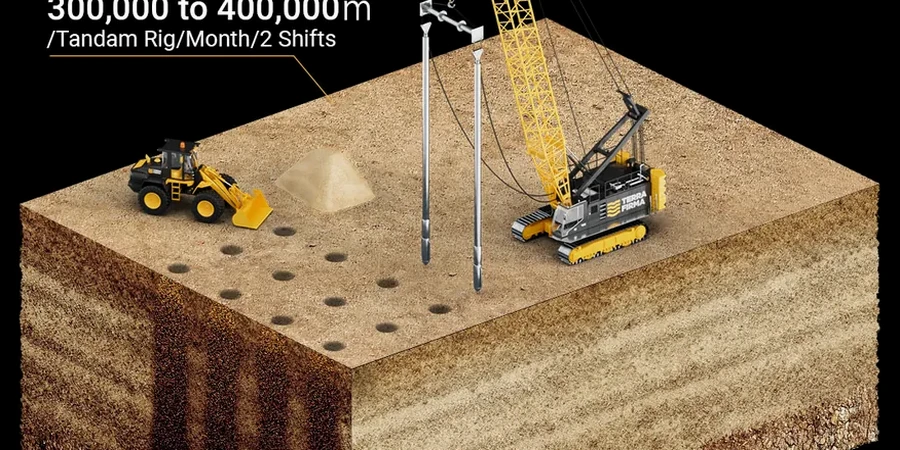
Numerous project types in the Bakersfield area routinely require ground improvement. Large distribution warehouses and logistics centers, which proliferate along the I-5 and Highway 99 corridors, impose heavy floor loads and tight flatness tolerances on ground that often consists of loose alluvium. Stone column design provides a robust solution for these structures by creating stiff, draining inclusions that reinforce the soil matrix and accelerate the dissipation of excess pore pressures. Oil and gas infrastructure, including tank farms and processing facilities, demands strict control of differential settlement to prevent connection failures and maintain operational safety. For more granular soils, Vibrocompaction design offers an efficient method to densify loose sands and gravels, significantly reducing the risk of liquefaction and improving bearing capacity. Municipal projects such as water treatment plants, schools, and bridge approaches also benefit from these technologies, as do the solar energy installations spreading across Kern County's arid landscape. Each application demands a tailored approach that considers the specific stratigraphy, groundwater conditions, and performance requirements.
Available services
Common questions
What is ground improvement and when is it necessary for a Bakersfield project?
Ground improvement refers to the modification of in-situ soils to enhance strength, stiffness, and drainage characteristics. It becomes necessary in Bakersfield when geotechnical investigations reveal loose sands susceptible to liquefaction, soft clays prone to excessive settlement, or undocumented fill that cannot support structural loads without treatment. The decision is driven by the California Building Code requirements and the performance criteria of the proposed structure.
How do local seismic hazards in Kern County influence ground improvement design?
Bakersfield's proximity to major fault systems creates significant liquefaction risk in the loose, saturated alluvial soils prevalent throughout the San Joaquin Valley. Ground improvement designs must account for the peak ground accelerations specified in ASCE 7 and CBC seismic maps, typically targeting a reduction in liquefaction potential index or achieving a required factor of safety against triggering. Post-improvement verification with CPT testing is standard practice.
What are the most common ground improvement methods used in Bakersfield?
The most prevalent methods in the Bakersfield area include vibrocompaction for densifying loose granular soils, stone columns for reinforcing soft clays and silts while providing drainage, and deep soil mixing for stabilizing very weak deposits. The choice depends on soil gradation, groundwater depth, and project loads. Dynamic compaction and rigid inclusions are also employed for specific site conditions and structural demands.
What testing is required to verify that ground improvement has met its design objectives?
Verification testing is mandated by the CBC and typically involves a combination of pre- and post-treatment in-situ tests. Cone penetration tests (CPT) are the most common method for evaluating densification and liquefaction mitigation, as they provide continuous profiles of tip resistance and sleeve friction. Standard penetration tests (SPT), pressuremeter tests, and geophysical surveys may supplement the CPT program. Load tests on improved ground are sometimes required for critical structures.