Bakersfield's semi-arid climate, with scorching summers and limited rainfall, creates compaction challenges that aren't apparent until the first irrigation cycle or seasonal rain hits a finished pad. The alluvial soils deposited by the Kern River contain stratified layers of silty sand and lean clay that respond unpredictably to moisture during compaction, making a standard one-size-fits-all approach risky. We run both Standard Proctor (ASTM D698) and Modified Proctor (ASTM D1557) on actual site material, not generic samples, so the maximum dry density and optimum moisture content you get reflect the native soil behavior on your parcel. For builders tackling the rapid expansion in northwest Bakersfield and the Rosedale corridor, where soil profiles shift from sandy loam to expansive clay within a single lot, this site-specific curve is the difference between a slab that stays level and one that develops cracks within two seasons. We frequently pair Proctor testing with sand cone density testing during fill placement to verify that field compaction meets the lab-derived target, creating a closed-loop quality control process that satisfies Kern County building inspectors and geotechnical engineers alike.
Compaction isn't about hitting a number on a nuclear gauge readout—it's about matching the lab's compactive effort to the equipment running on your pad so the density specification is actually achievable.
How we work
Local considerations
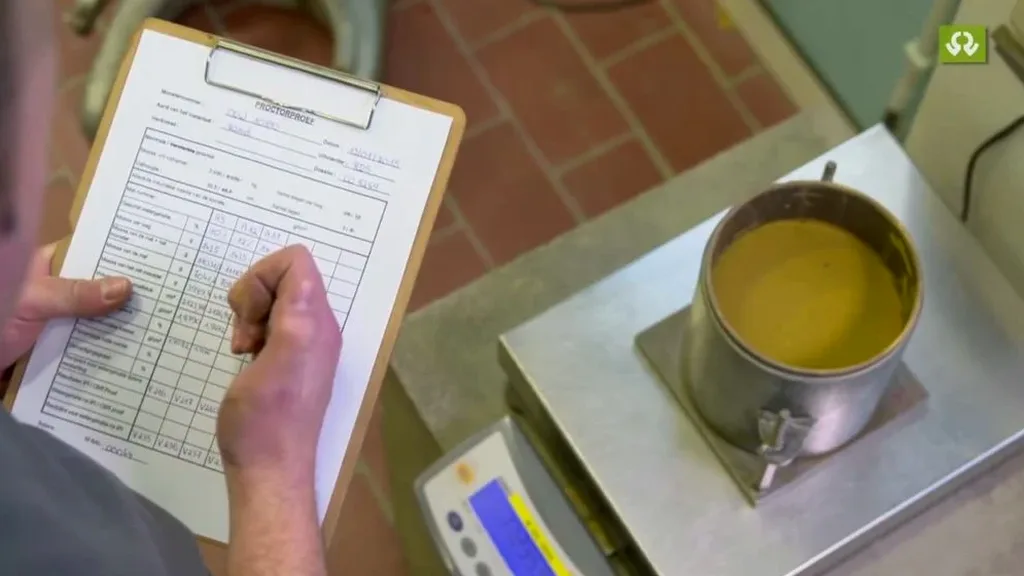
Inside our Bakersfield lab, the Proctor hammer on the mechanical compactor drops with a rhythm that becomes second nature to the technicians running it—25 blows per layer across five layers, the 5.5-pound weight falling precisely 12 inches each time for a Standard test, or the heavier 10-pound hammer dropping 18 inches for Modified. The equipment itself isn't complex, but the sample preparation is where labs in the Central Valley routinely cut corners. If the technician air-dries a moisture-sensitive clay at too high a temperature before re-wetting, the clay fraction partially dehydrates and the resulting Proctor curve underestimates optimum moisture by two to three percentage points, which means your field crew is chasing a target that doesn't match the soil they're actually compacting. We run moisture content verification on every point of the compaction curve using oven-dry method per ASTM D2216, and we reject any curve with fewer than four well-distributed points spanning the peak. For Bakersfield's silty sands, where the Proctor curve is sharp-peaked and unforgiving, that fourth point on the wet side of optimum is what tells the contractor exactly how much leeway they have before they start pumping the fill.
Relevant standards
The applicable standards for Proctor compaction testing in Kern County soils include ASTM D698-12 (2021), ASTM D1557-12 (2021), ASTM D4718-15, Caltrans Standard Specifications Section 19, and ASTM D2216-19.
Associated technical services
Standard Proctor (ASTM D698) for Residential & Light Commercial
The right choice for single-family pads, shallow utility trenches, and landscape berms where compaction equipment is smaller and lift thicknesses are controlled to 8 inches or less. We run the full five-point curve with oversize correction per ASTM D4718, and we include a one-point verification check if you need to confirm a borrowed curve from a different lot in the same subdivision.
Modified Proctor (ASTM D1557) for Heavy Civil & Roadway Subgrade
Specified for Caltrans roadway sections, commercial building pads with heavy slab loads, and any fill placed at 12-inch loose lifts with large vibratory rollers. We report maximum dry density, optimum moisture content, and the zero-air-voids curve on the same graph so your field technician can spot an erroneous nuclear gauge reading before it becomes a failed compaction test.
Typical parameters
Common questions
How much does a Proctor test cost in Bakersfield?
How long does it take to get Proctor results?
Standard turnaround is 24 to 48 hours from sample receipt for a full five-point curve with moisture content verification on every point. We offer same-day results for rush samples received by 9 AM, which is common during peak summer construction when grading crews are moving fast and can't afford to wait on lab data.
Do I need Standard or Modified Proctor for my Bakersfield project?
It depends entirely on the specification and the compaction equipment on site. Standard Proctor (12,400 ft-lbf/ft³) matches the compactive energy of smaller rollers and hand-operated compactors typical on residential pads. Modified Proctor (56,000 ft-lbf/ft³) is required for Caltrans roadway sections and most commercial building pads where heavy vibratory rollers are specified. We recommend you send us the project geotechnical report or spec section, and we'll confirm which method applies before we start testing.
Why did my field density test fail when the lab Proctor curve said it should pass?
The most common cause in Bakersfield soils is a mismatch between the Proctor method and the actual field compactive effort. If the lab ran a Modified Proctor but your crew is using a lightweight trench roller on thin lifts, the field energy is much closer to Standard Proctor levels and you'll struggle to hit the higher density target. Other culprits include moisture content drift between the lab curve and field conditions, oversize particles in the fill that weren't corrected for, or a borrowed Proctor curve from a different soil source that doesn't represent the material actually being placed.